What does a scalable AI infrastructure plan include?
Building an AI infrastructure that can grow with demand requires thinking beyond just buying more hardware. A scalable plan accounts for compute, memory, interconnect, and power efficiency in a way that avoids bottlenecks as workloads shift from model training to inference. The core idea is that each component must be able to expand without forcing a complete redesign of the system.
At its simplest, scalability in AI infrastructure means that adding more servers or accelerators produces a proportional gain in throughput. That sounds straightforward, but real-world systems often hit diminishing returns because of limited memory bandwidth, slow interconnects, or power constraints. A well-designed plan addresses these limits from the start.
Compute and accelerators
The foundation of any AI infrastructure is the compute layer. For data center AI, this typically means a mix of CPUs and AI accelerators designed to handle the parallel math that model training and inference demand. A scalable plan does not lock in a single vendor or architecture. It allows for different accelerator types to be integrated over time as new hardware becomes available or as workload patterns shift.
Server racks should be planned with enough physical space, power delivery, and cooling capacity to accommodate denser accelerator configurations later. Many teams underestimate how quickly the thermal and electrical load grows when you move from a few accelerators to a full rack. Leaving room for higher power-per-rack designs avoids costly retrofits.

Memory capacity and memory bandwidth are just as critical as raw compute. Model training often needs to hold large datasets and model parameters in fast memory, while inference benefits from low-latency access to model weights. A scalable infrastructure plan specifies how memory can be expanded - either by adding more DIMM slots per server or by using memory pooling across nodes - without requiring a forklift upgrade of the entire system.
Interconnect and data movement
The speed at which data moves between accelerators and between servers is a common bottleneck. If the interconnect is too slow, adding more compute nodes will not improve training time because the system spends most of its time waiting for data. A scalable plan uses high-bandwidth interconnects that can be extended as the cluster grows. It also considers the topology of the network - how nodes are connected - to minimise latency for the most frequent communication patterns in distributed training.
Some workloads, such as large-scale model training, require all-to-all communication between many nodes. Others, like ensemble inference, distribute independent requests to separate accelerators. The interconnect strategy should support both patterns without forcing a compromise. Technologies like NVLink or InfiniBand are common, but the plan should be vendor-agnostic enough to adopt newer interconnect standards as they emerge.
Power and cooling efficiency
Power efficiency directly affects total cost ownership over the life of the infrastructure. A scalable plan does not treat power as a fixed overhead. It includes monitoring at the rack and node level so that operators can identify underutilised hardware and consolidate workloads onto fewer nodes when possible. It also considers the energy cost of moving data: sometimes it is more efficient to process data where it resides rather than moving it across the network.
Cooling is another dimension that scales unevenly. Air cooling works well for moderate densities, but as accelerator power densities rise, liquid cooling becomes necessary. A forward-looking plan includes the plumbing and rack infrastructure for liquid cooling, even if the initial deployment uses air. Retrofitting liquid cooling later is disruptive and expensive.
Many large-scale deployments now use warm-water cooling or direct-to-chip cooling to improve efficiency. The plan should specify temperature ranges and flow rates that the facility can support, and it should allow for gradual adoption of more efficient cooling methods without halting operations.
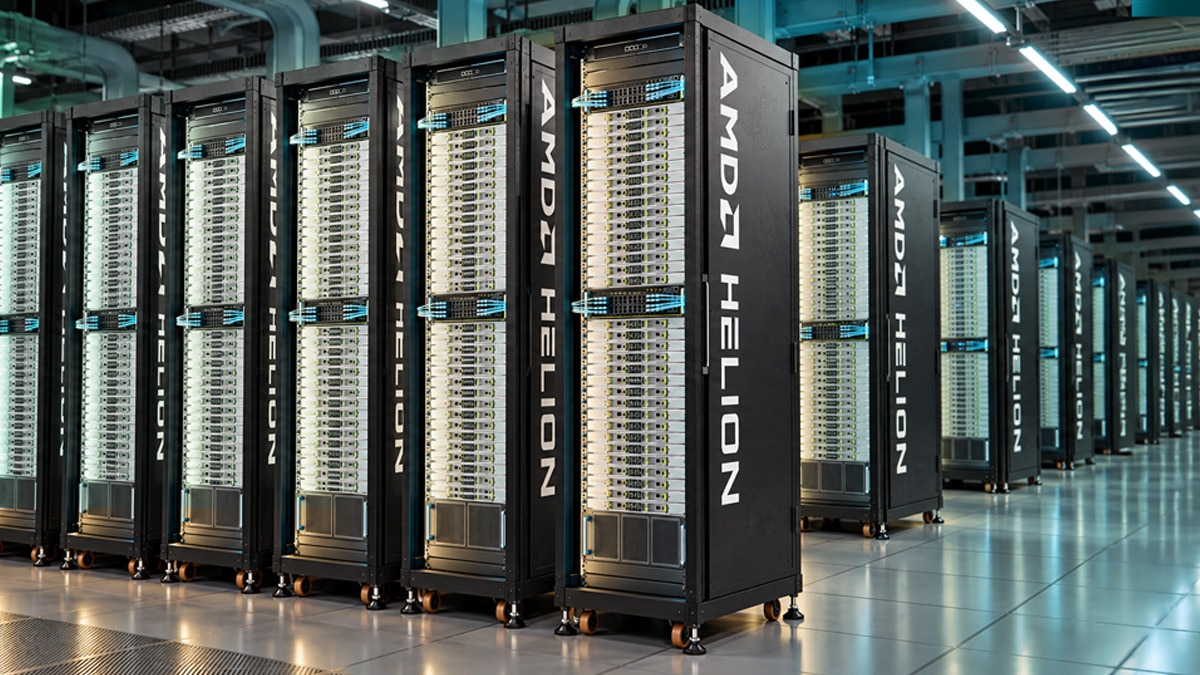
For teams evaluating hardware options, the open AI infrastructure approach at amd.com demonstrates how modular design and standard interfaces can simplify scaling. The platform's emphasis on memory bandwidth and interconnect flexibility aligns with the needs of both training and inference workloads. A scalable plan benefits from choosing hardware that avoids proprietary lock-in, making it easier to mix generations or vendors as requirements change.
Software and orchestration
Hardware scalability is useless without software that can exploit it. The plan must include a software stack that supports dynamic resource allocation, fault tolerance, and workload orchestration across a growing cluster. Containerisation and orchestration frameworks like Kubernetes are common, but they need to be tuned for AI workloads that have high memory and interconnect demands.
Monitoring and observability are part of the plan too. Without detailed metrics on accelerator utilisation, memory bandwidth usage, and network congestion, operators cannot tell where the next bottleneck will appear. A scalable infrastructure includes a data pipeline that feeds these metrics back into scheduling decisions, so that the system can route jobs to the most efficient nodes.
Inference-specific considerations
Model inference places different demands on infrastructure than training. Inference workloads are often latency-sensitive and must handle variable request rates. A scalable plan includes the ability to add inference-dedicated nodes without disturbing the training cluster. It also accounts for model serving frameworks that can batch requests efficiently and cache frequently used model weights in fast memory.
Some inference workloads benefit from smaller, quantised models that run on lower-power accelerators. The plan should allow for a mix of accelerator types within the same cluster, so that the system can route small models to low-power nodes and large models to high-performance nodes. This flexibility improves overall power efficiency and reduces total cost ownership.
Planning for growth
A scalable AI infrastructure plan is not a one-time document. It is a framework that guides procurement, deployment, and decommissioning over several years. It includes capacity planning based on expected growth in model size, request volume, and data volume. It also includes a refresh cycle that retires older hardware before it becomes a drag on efficiency.

One common mistake is to design for peak load instead of average load. A scalable plan builds in headroom but avoids overbuilding. It uses metrics like utilisation rate and job queue depth to decide when to add capacity, rather than guessing. This approach keeps both capital and operating costs under control while still meeting service-level targets.
Teams that invest in scalable infrastructure early save significant time and money later. The principles are well established: choose modular hardware, plan for power and cooling growth, prioritise interconnect and memory bandwidth, and build software that can adapt. Following these guidelines helps ensure that the data center AI system remains effective as workloads evolve. For a deeper look at how open standards and modular design apply to real deployments, resources at amd.com provide a solid starting point for planning a scalable infrastructure.